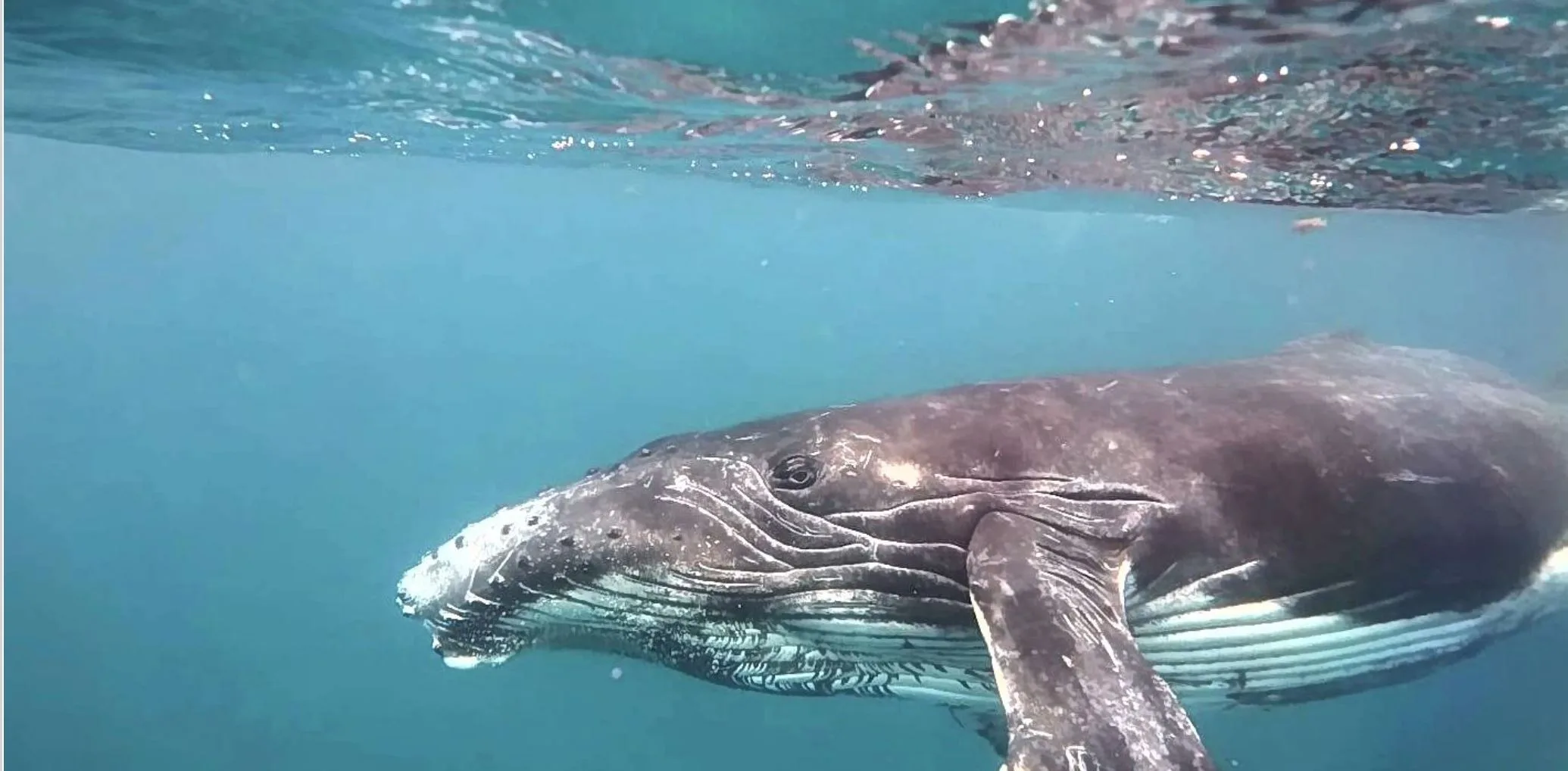
Every year between July and October, hundreds of humpback whales migrate from Antarctica to the calm, tropical lagoons of the Kingdom of Tonga to mate, give birth, and nurse their newborn calves. Tonga is world-renowned as one of the few destinations on the planet where you can snorkel right alongside these 40-tonne marine giants.
Tonga Whale Swim Season: Best Time to Visit (2026)
Timing your trip is key when planning a Tonga whale swim day trip or multi-day adventure. While whales are present throughout the South Pacific winter, whale activity and ocean conditions change as the season progresses.
| Month | Whale Activity & Conditions | Recommended For |
|---|---|---|
| July (Early Season) | Whales arrive in Tonga's warm coastal bays. Pregnant females give birth in sheltered waters. | Early travelers seeking fewer crowds and great package deals. |
| August (Peak Season) | High density of active mothers, calves, and singing males. Excellent surface activity (breaching & tail-slaps). | Best time overall for close, curious underwater interactions. |
| September (Peak Season) | Calves grow larger and more playful. Ocean visibility is at its peak. | Underwater photographers and bucket-list travelers. |
| October (Late Season) | Whales begin their southward migration. Inquisitive calves offer memorable interactions. | Late-season visitors looking for warmer island weather. |
Where to Swim with Whales in Tonga
The Kingdom of Tonga is an archipelago of over 170 tropical islands, but whale swimming operations focus primarily on three distinct island groups:
1. Vava’u Archipelago (The Whale Capital)
Famous for its crystal-clear bays, deep channels, and limestone caves, Vava’u whale swims are world-renowned. The sheltered islands create a natural sanctuary for mother whales and calves, making it the top destination for multi-day liveaboards and week-long whale expeditions.
2. Tongatapu & Nuku'alofa (Convenient Day Trips)
If you are short on time or flying directly into Fua'amotu International Airport, taking a Tonga whale swim day trip from Tongatapu allows you to jump on a boat right out of Nuku'alofa without needing domestic island transfer flights. It’s ideal for 3- to 5-day island getaways.
3. ‘Eua & Ha’apai (Uncrowded & Pristine)
Located just a short flight or ferry trip south of Tongatapu, ‘Eua sits along a deep oceanic trench offering thrilling deep-water snorkeling. Ha'apai offers secluded coral reefs and quiet fales for off-the-beaten-path travelers.
Swim with Whales Tonga Price & Cost Breakdown (2026)
When budgeting for a Tonga whale watching or snorkeling trip, costs depend on whether you choose single day charters or multi-day packages:
- Tonga Whale Swim Day Trip Cost: Single-day boat charters typically range from $350 to $550 AUD ($230–$360 USD) per person. This generally includes your certified ocean guide, skipper, mask/snorkel, fins, wetsuit, lunch, and reef stops.
- 3-Day Pass or Multi-Day Charters: Many travelers choose a 3-day charter package (ranging from $1,200 to $1,800 AUD per person) to increase their chances of multiple whale interactions across varying weather days.
- 7-Day All-Inclusive Expeditions: Complete packages including beachfront accommodation, daily boat runs, meals, and island transfers range from $4,500 to $7,500+ AUD depending on resort luxury level.
What to Expect on a Tonga Whale Swim Day Trip
Every operator runs things slightly differently, but a typical Tonga whale swim day trip follows a similar rhythm from morning to afternoon:
- Morning Briefing & Boarding: Meet your skipper and ocean guide, get fitted with a wetsuit, mask, snorkel and fins, and go through a safety briefing before departure.
- Scanning the Blue: Cruising through coastal passages and channels, watching for spouts, tail slaps, and breaches that signal nearby whales.
- Soft Entry: When a calm pair or curious pod is located, your guide enters the water first. Swimmers typically enter in small groups to keep the interaction relaxed for the whales.
- The Encounter: Watch humpbacks glide past at a respectful distance, listen to the low song of a nearby male, or observe a calf surfacing to breathe.
- Island Lunch & Snorkeling: Most day trips include a break for lunch on a beach or the boat, often followed by reef snorkeling at a nearby site before heading back.
Tonga Travel & Tourist Safety Guide
Is Tonga Safe for Tourists?
Yes, Tonga is widely considered one of the safest and most hospitable destinations in the South Pacific. It is safe for families, couples, and solo female travelers. Crime rates are low, and Tongan culture is deeply welcoming.
Things to Do in Tongatapu & Nuku'alofa
Between whale swim charters, explore the rich cultural sights around Tongatapu: visit the Mapu 'a Vaea blowholes, tour the ancient Ha'amonga 'a Maui trilithon, explore local handicraft markets in Nuku'alofa, or relax on the best beaches along the western coastline.
Important Sunday Sabbath Laws
Tonga observes a strict Sunday Sabbath by national law. Business operations, commercial fishing, and whale swim tours do not run on Sundays. Plan your travel itinerary with Sunday as a rest, beach, or church service day.
Frequently Asked Questions
How far in advance should I book 2026 whale swim dates?
Because local regulations strictly cap boat capacities to keep group sizes small, peak season dates (August and September) fill up quickly. Booking 6 to 12 months in advance is strongly recommended.
Can non-swimmers join whale watching trips in Tonga?
Yes! Non-swimmers can book as boat-based observers. Watching 40-tonne humpback whales breach, blow, and slap their flippers from the deck of the vessel is an impressive spectacle in itself.
What gear is provided on a whale swim day trip?
Most licensed operators provide masks, snorkels, fins, and 2.5mm–3mm neoprene wetsuits. You only need to bring swimwear, sunscreen, a towel, a windproof jacket, and a camera (such as a GoPro).
What is the water temperature in Tonga during whale season?
Water temperatures range between 24°C and 26°C (75°F–79°F) during whale season. A 2.5mm or 3mm neoprene wetsuit (typically provided by your operator) gives ideal warmth for multi-hour boat excursions.